Where to See Authentic Flamenco in Seville
A neighbourhood guide to authentic flamenco in Seville — Triana's Gitano roots, the Santa Cruz tablao cluster, El Arenal, and tablao vs pena explained.
“Authentic” is the word every flamenco visitor wants — and the hardest to pin down. In Seville it comes down to two things: the neighbourhood you are in, and the type of venue you choose. This guide maps the city’s flamenco geography so you can find a show that feels real rather than staged for tour buses. If you would rather skip straight to a dependable booking, the theater show on our homepage is the most-reviewed in the city.
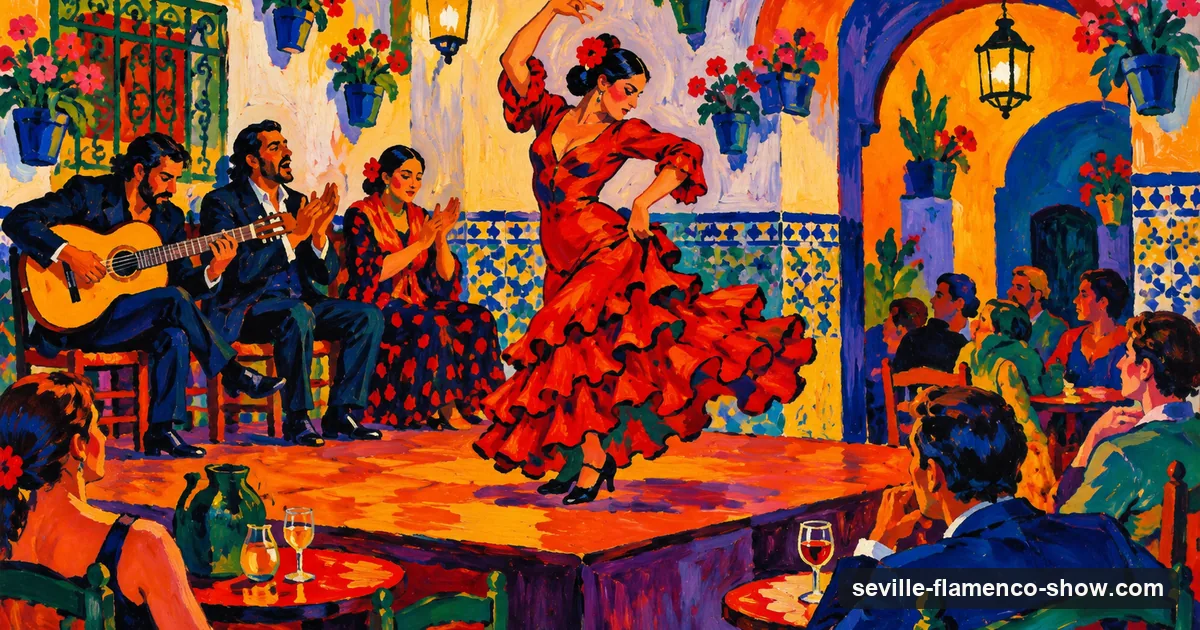
First: Tablao, Peña, or Theater?
Before the neighbourhoods, understand the three venue types — the distinction matters more than the postcode.
| Venue type | What it is | Feel |
|---|---|---|
| Tablao | A commercial venue with a raised wooden stage; scheduled, ticketed shows | Polished, visitor-friendly, reliably good |
| Peña flamenca | A non-commercial members’ club run by aficionados | The most local; informal, rarely advertised |
| Theater show | A large staged company production in a formal theater | Choreographed, big-scale, short runs |
A common myth is that tourist-facing tablaos are “fake” flamenco. They are not — reputable tablaos employ professional artists and deliver genuine performances. The real difference between authentic and disappointing is venue quality and format, not whether tourists are in the room. A peña offers the most local atmosphere, but schedules are informal and some events are members-only.
Triana: the Historic Soul
If one neighbourhood is the cradle of Seville flamenco, it is Triana — the riverside district on the west bank of the Guadalquivir. From the 15th century until the mid-20th, Triana was the city’s principal Gitano (Roma) quarter. The Roma settled here in part because Gypsies were historically barred from living intramuros, inside the city walls, so Triana became the heart of Gitano life and the families that shaped flamenco’s song, dance, and guitar.
Triana’s flamenco grew out of the corrales de vecinos — communal tenement buildings arranged around a shared open-air courtyard, where families gathered and informal flamenco happened. A few survive today along Calle Castilla, Calle Alfarería, and Calle Pagés del Corro.
One honest caveat: from the late 1960s onward, much of Triana’s historic Gitano community was relocated to a housing estate, Las Tres Mil Viviendas, completed in 1977. Today’s Triana is gentrified and touristy, and its flamenco heritage is largely commemorative. You come here for the historic context — and for venues like the modern Teatro Flamenco Triana — rather than for a living Gypsy quarter.
Barrio de Santa Cruz: the Tablao Cluster
The Barrio de Santa Cruz, Seville’s former Jewish quarter, is today the densest concentration of flamenco venues in the city. Its tangle of narrow lanes near the Cathedral and the Alcázar holds several tablaos and intimate venues — including Tablao Los Gallos, the oldest tablao in Seville and one of the oldest anywhere, open since 1966.
Santa Cruz is also where you find Casa de la Memoria, an intimate heritage-house tablao of roughly 30 seats rated 4.77/5, and the theater venue featured on our homepage. Worth knowing: Santa Cruz is the historic Jewish quarter, not an ancestral flamenco neighbourhood like Triana — its flamenco prominence today is a modern clustering of venues, not deep roots. That does not make the shows less good; it just sets the history straight.
El Arenal and the Museo del Baile Flamenco
A third visitor area is El Arenal, the riverside district by the bullring, home to the long-running Tablao Flamenco El Arenal.
Near the Plaza de la Alfalfa sits the Museo del Baile Flamenco — the world’s first museum dedicated to flamenco dance, founded by the celebrated dancer and choreographer Cristina Hoyos and opened in 2006. It pairs a daytime museum visit with live evening and matinée performances, which makes it a strong single stop for first-timers who want both context and a show.
The Alameda and Macarena: the Bohemian North
For something off the standard circuit, the Alameda de Hércules — a tree-lined promenade in the northern old town — is Seville’s bohemian quarter. Flamenco legends such as Manolo Caracol and La Niña de los Peines are tied to this area and the nearby Macarena district. The Alameda hosts occasional flamenco and weekend peña events rather than a dense tablao cluster, so it rewards travellers willing to check local listings.
How to Choose Your Show
A simple matching guide:
| You want… | Go for… |
|---|---|
| Historic flamenco context | Triana — the riverside heartland |
| The widest choice of venues | Barrio de Santa Cruz |
| Museum context plus a show | Museo del Baile Flamenco |
| The most local, informal scene | A peña — check listings, just show up |
| Maximum intimacy | A small heritage-house tablao (~30 seats) |
| Guaranteed quality, most reviews | The featured Teatro Flamenco Sevilla show |
Whichever you pick, book ahead — intimate venues sell out 5–7 days in advance in spring and autumn, and weeks ahead during the September Bienal de Flamenco. For timing your visit, see our best-time-to-see-flamenco guide; for the etiquette once you are inside, read what to expect at a flamenco show.
Ready to Book?
The most-reviewed flamenco show in Seville — the Teatro Flamenco Sevilla theater show — is a one-hour live performance with six performers, rated 4.7 out of 5 from 20,903 reviews, from $24 with free cancellation (checked April 2026). For a ranked list by who you are, see the best flamenco show in Seville. It is the safest authentic choice in a city full of them.
See Live Flamenco in Seville
One hour, six performers, live guitar and song at Teatro Flamenco Sevilla. Free cancellation up to 24 hours before.
Check Dates & Prices